What Does It Mean to Be a Man? A Father’s Guide for Sons
What Does It Mean to Be a Man? How Fathers Can Help Sons Build Their Own Identity
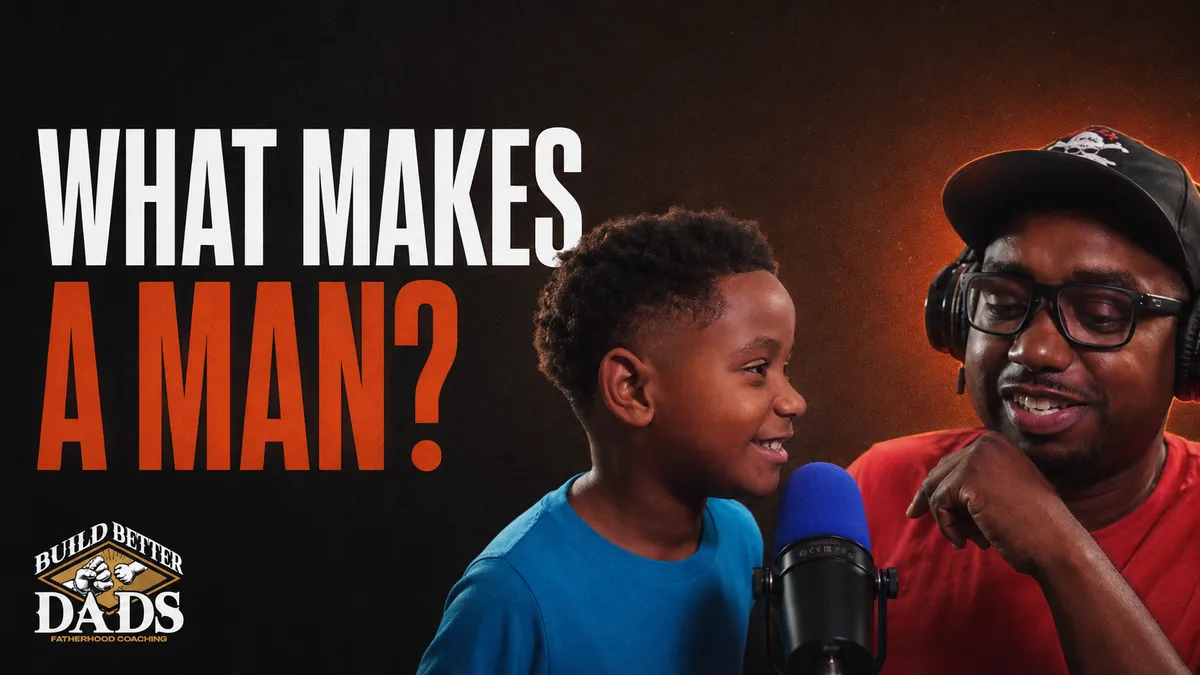
My son Karter once asked me a question that every boy eventually has to answer:
What does it mean to be a man?
The world will gladly answer that question for him if I do not help him think it through.
Social media may tell him manhood is money, attention, muscles and control. Some men may tell him that showing emotion makes him weak. Other voices may act as though strength, standards and responsibility are problems a boy should avoid.
I do not want my son trapped between those two extremes.
I do not want him to become passive, afraid to make decisions or unwilling to carry responsibility. I also do not want him performing toughness—hiding fear, disrespecting people and pretending he never needs help.
My job is not to hand Karter a costume called masculinity. My job is to help him build the character, judgment and self-respect to become a man he can live with when nobody is watching.
What does it mean to be a man?
Being a man means accepting responsibility for your choices, practicing self-control, telling the truth, treating people with dignity, developing useful strength and using that strength in service rather than domination. A healthy man can be courageous without being reckless, emotionally honest without surrendering discipline, and confident without needing to control others.
A father should offer his values and example while giving his son room to think, question, grow and take ownership of the man he is becoming.
Boys are already receiving messages about manhood
Even when fathers avoid the subject, sons are learning definitions of manhood from somewhere:
What their friends celebrate
What athletes, entertainers and influencers display
How men speak about women
How adults handle pressure and conflict
What happens when a boy cries, fails or asks for help
Whether power is used to serve people or control them
Whether fathers admit mistakes or defend every decision
Your son is not only listening to what you say about manhood. He is studying what you do when money is tight, when someone disrespects you, when you are wrong, when you are tired and when nobody is applauding.
That means the conversation cannot begin and end with “Be a man.” A boy needs to know what those words require.
Two incomplete versions of manhood
The passive man
Passivity is not kindness. A passive man avoids necessary decisions, waits for others to carry his responsibilities and stays silent when courage is required. He may call it peace, but sometimes it is fear of conflict, failure or disapproval.
A son should learn that healthy manhood includes initiative. He needs to practice making decisions, doing difficult work, protecting boundaries and acting without waiting to be rescued.
The performative tough guy
Performative toughness is not strength. It depends on appearing unaffected, intimidating others, collecting attention and refusing vulnerability. It may look powerful from a distance, but it is fragile because it requires constant proof.
A boy who believes he must never feel fear does not become fearless. He becomes skilled at hiding fear. A boy who believes anger is the only acceptable emotion may never learn to name disappointment, grief, shame or loneliness.
Research and professional guidance do not suggest that strength itself is the problem. The concern is rigid expectations that restrict emotional expression, discourage help-seeking or equate manhood with dominance. The American Psychological Association’s guidance on men and boys discusses how restrictive masculine norms can affect relationships and mental health. American Psychological Association overview
The answer is not to remove strength from manhood. It is to define strength more completely.
Seven qualities of healthy manhood fathers can teach
1. Character: Who are you when nobody is watching?
Character is the part of you that remains when applause, punishment and supervision disappear.
Teach your son that integrity means his private decisions agree with the values he claims publicly. This includes small choices: returning what is not his, keeping a promise, telling the truth when lying would be easier and refusing to join cruelty just to fit in.
Ask your son: What is one decision you would still make if nobody could ever find out?
Model it: Let him see you correct a mistake even when you could have escaped responsibility.
2. Responsibility: Can people depend on you?
Responsibility is not carrying the whole world. It is carrying what belongs to you.
A responsible man handles his commitments, learns useful skills and accepts consequences. He does not blame everyone else for the condition of his life. He also knows the difference between helping someone and taking over responsibilities that person must carry.
Give your son real ownership before adulthood: waking himself, completing household work, managing money, arriving on time and repairing what he damages.
Ask your son: What responsibility are you ready to handle without being reminded?
Model it: Do what you said you would do. When you cannot, communicate instead of disappearing.
3. Self-control: Can you govern your strength?
Strength without self-control becomes danger.
Self-control means feeling anger without allowing anger to make every decision. It means handling rejection without revenge, attraction without entitlement, confidence without humiliation and power without abuse.
Self-control does not mean pretending emotion is absent. It means recognizing emotion early enough to choose a response.
Ask your son: What usually happens in your body before you lose your temper?
Model it: Let him see you pause, lower your voice, take space when necessary and return to finish a difficult conversation.
4. Courage: Can you act while fear is present?
Courage is not the absence of fear. It is the ability to act according to your values while fear is telling you to hide, lie, follow the crowd or quit.
Sometimes courage looks physical. More often, it looks like admitting the truth, apologizing first, defending someone who is being mistreated, applying after rejection or asking for professional help.
Ask your son: When have you done the right thing even though it made you nervous?
Model it: Tell him about a moment when you were afraid and acted anyway. Do not edit yourself into a superhero.
5. Emotional honesty: Can you name what is happening inside you?
Emotional honesty is not emotional impulsiveness. A boy does not need permission to make every feeling somebody else’s emergency. He needs the language to understand what he feels and the skills to respond without harming himself or others.
Instead of telling a son only to “calm down,” help him become specific:
Am I angry—or embarrassed?
Am I lazy—or discouraged because I might fail?
Am I fine—or afraid nobody will understand?
Do I need advice, action, rest or someone to listen?
The CDC’s 2023 youth data show that adolescent mental-health challenges remain significant and that supportive factors—such as a dependable household adult, connectedness and parental monitoring—are associated with lower prevalence of several mental-health and suicide-risk indicators. CDC Youth Risk Behavior Survey analysis
Ask your son: Which feeling is hardest for you to show—and what do you think would happen if you showed it?
Model it: Use accurate emotional language yourself. “I am disappointed and worried” teaches more than anger alone.
6. Respect: Can you recognize another person’s dignity?
Respect does not mean agreement, obedience to everyone or allowing mistreatment. It means recognizing that another person is human—not an object, audience, enemy or possession.
Teach your son to respect women without pretending they are helpless, respect men without worshipping status and respect himself without believing he is superior.
Respect appears in how he handles “no,” disagreement, rejection, privacy, consent, competition and people who cannot offer him anything.
Ask your son: How does a strong man respond when someone tells him no?
Model it: Let him see you disagree without degrading people.
7. Purpose and service: What will your strength be used for?
A boy may want strength, influence and money. Those desires are not automatically wrong. The deeper question is what he plans to do with them.
Purpose moves manhood beyond personal image. It asks what problems he can solve, what people can depend on him, what work deserves his effort and what legacy his choices are creating.
Service does not mean abandoning himself to save everyone. A man can contribute, protect and provide while maintaining boundaries and accepting that he cannot control every outcome.
Ask your son: Who should benefit because you became stronger, wiser or more successful?
Model it: Let him see you use time, knowledge or resources to help without needing public recognition.
How should a father talk to his son about manhood?
Use this five-part conversation instead of delivering one long speech.
Step 1: Begin with curiosity
Ask:
When you hear the words “be a man,” what do you think they mean?
Do not correct his first answer. His answer tells you what he has already absorbed.
Step 2: Ask where the definition came from
Follow with:
Who or what has influenced that definition the most?
He may mention you, another relative, friends, music, sports, gaming, a creator or a painful experience. Stay curious. If you attack the source immediately, he may defend it instead of examining it.
Step 3: Test the definition against real life
Ask:
Would that definition help a man become a trustworthy husband, father, friend, employee or leader?
This takes the discussion out of performance and into consequences.
Step 4: Share your definition—and your mistakes
Tell him what you believe, but also tell him where you failed to live it.
You might say:
I believe a man takes responsibility, controls himself, protects people without controlling them and tells the truth. I did not understand all of that when I was your age. Some lessons cost me more because I learned them late.
Your credibility does not come from pretending you were always right. It comes from showing him that growth is possible.
Step 5: Let him build his own statement
Invite your son to complete this sentence:
The kind of man I want to become is someone who…
Write his answer down. Revisit it every year. His wording should mature as his experiences grow, but the process gives him ownership instead of asking him to repeat a slogan.
Ten questions fathers can ask about manhood
What do you think makes someone a good man?
Which men do you respect, and what have they actually done to earn it?
What is the difference between being strong and appearing tough?
What responsibility should come with freedom?
How should a man respond when he is wrong?
Which emotion is hardest for you to express?
How should a man treat someone who has less power than he does?
What would you refuse to do even if your friends respected you for it?
When is asking for help an act of strength?
What do you want people to be able to depend on you for?
For a broader set covering money, friends, pressure, relationships and the future, read 25 Questions Every Father Should Ask His Son Before 18 after that companion article is published.
What fathers must model—not merely explain
Your son will notice whether your life supports your definition.
If you teach honesty but lie when truth becomes inconvenient, he sees it. If you teach respect but humiliate his mother, service workers or strangers, he sees it. If you tell him emotions are healthy but mock him whenever he shows one, he sees it.
Modeling healthy manhood can look ordinary:
Apologizing without adding “but you made me…”
Keeping promises or communicating when plans change
Asking a doctor, counselor, mentor or friend for help
Cooking, cleaning and caring for family without treating it as beneath you
Setting boundaries without threats
Losing without blaming
Winning without humiliating
Admitting that you do not know
Showing affection without embarrassment
Working consistently when nobody is watching
A father does not need to be perfect to model growth. In fact, a son who sees his father repair mistakes learns that failure is not the end of identity.
Give your son room to become himself
Your son may not share every interest, talent or personality trait you have. He may be quieter, more artistic, less athletic, more academic, more social or more cautious. Difference is not automatically deficiency.
Guide his values firmly, but do not demand that he become a copy of you.
The goal is not, “Become the man I would have been.”
The goal is, “Become a responsible, truthful and capable version of the person you were created to be.”
This requires a relationship where guidance travels in both directions: the father speaks, the son responds, and both remain engaged. Responsive back-and-forth interaction is a foundational feature of healthy caregiver relationships, according to the Center on the Developing Child at Harvard University. Harvard Center on the Developing Child
When your son’s definition worries you
If your son praises domination, cruelty, reckless risk or emotional numbness, do not begin by insulting him or the people he follows. Ask him to examine outcomes.
Try:
What happens to the people closest to a man who lives that way?
Can he keep trustworthy relationships?
Does he control his anger, or does anger control him?
Is his confidence stable, or does he constantly need an audience?
Would you trust him with your future child?
What would happen if everybody followed that rule?
Then set appropriate boundaries around dangerous behavior while keeping communication open. Understanding an influence does not require approving it.
If your son becomes persistently withdrawn, hopeless, unusually aggressive, reckless, threatening or unable to function normally, seek help from a qualified health or mental-health professional. If there is immediate danger or talk of suicide, contact emergency support. In the United States, call or text 988.
Frequently asked questions
What is a healthy definition of masculinity?
Healthy masculinity combines responsibility, self-control, courage, emotional awareness, respect and service. It permits strength and ambition while rejecting domination, cruelty and the belief that needing help makes a man worthless.
At what age should fathers talk to sons about manhood?
Begin with age-appropriate language in childhood and deepen the conversation as your son matures. Do not wait until age 18. Boys form ideas about strength, emotion, respect and gender long before adulthood.
Should a father tell his son what manhood means or let him decide?
A father should teach clear family values and explain the consequences attached to them. He should also ask questions and let his son examine, articulate and take ownership of those values. Guidance and independent thought are not opposites.
Does emotional openness make boys less resilient?
No. Naming an emotion is different from being controlled by it. Emotional awareness can help a boy recognize stress, communicate needs, seek appropriate support and choose a disciplined response.
How can a single mother teach her son about manhood?
A mother can teach responsibility, integrity, respect, emotional regulation and practical competence. She can also help her son build relationships with trustworthy male relatives, mentors, coaches, educators or community leaders. A boy benefits from multiple dependable adults; no parent has to embody every perspective alone.
What if a father was not taught healthy manhood himself?
He can begin by admitting that gap. A father can learn alongside his son, examine the lessons that harmed or helped him, seek trustworthy mentors and practice a clearer definition now. Breaking a pattern is itself an act of responsibility.
How can fathers teach toughness without teaching emotional suppression?
Teach boys to tolerate discomfort, keep commitments, recover from failure and act according to their values. At the same time, teach them to name emotions, communicate honestly and seek help before a problem becomes a crisis. Resilience requires regulation—not denial.
Your son needs more than the words “be a man”
He needs a definition he can practice.
He needs to know that strength is valuable—but must be governed. That emotions carry information—but do not get to control every decision. That responsibility matters—but he is not required to save everyone. That confidence can coexist with humility. That asking for help can protect the very people who depend on him.
Most of all, he needs a father willing to live the lesson, repair mistakes and keep the conversation going.
Ask your son this week:
What kind of man do you want to become—and what can we begin practicing now?
For the complete framework, read 7 Conversations Every Father Should Have With His Son Before 18.
Subscribe to the Build Better Dads YouTube channel for practical conversations about fatherhood, financial resilience, relationships and preparing children for the real world.
Help your son develop resilience, responsibility and character with The UnBreakable Son Ebook.