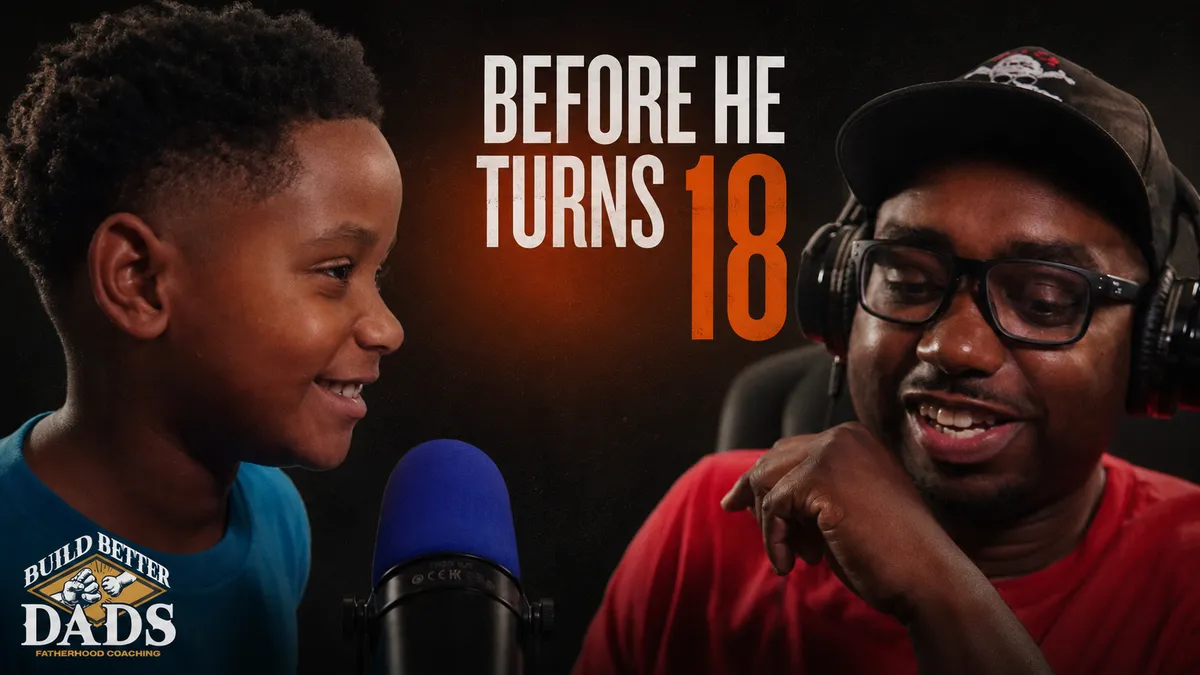
7 Conversations Every Father Should Have With His Son Before 18
My son will turn 18 one day.
That sounds obvious, but every father knows how quickly the years move. One day your son needs help tying his shoes. Then, almost without warning, he is making decisions that could shape the rest of his life.
I think about that often with my son, Karter.
What will he know when he leaves my house? What will he understand about money, relationships, pressure, failure and responsibility? Will he know how to recover when life does not go according to plan? Will he know what kind of man he wants to become?
Most importantly, will I have actually talked with him about these things—or will I assume that he learned them somewhere else?
Our sons receive messages every day from friends, social media, entertainment and the culture around them. If fathers remain silent, those voices will gladly fill the space.
We cannot wait until our sons are 18 to start preparing them for adulthood. We must begin the conversations while we still have the opportunity to influence how they see themselves and the world.
What should a father talk about with his son before he turns 18?
Before his son turns 18, a father should talk with him about character, money, relationships, emotional strength, responsibility, failure and legacy. These should not be one-time lectures. They should be continuing conversations, supported by the father's example and adjusted as the son grows.
Here are seven conversations I believe every father should have with his son before adulthood.
1. Who are you when nobody is watching?
Before we talk to our sons about careers, money or success, we need to talk about character.
Character is what guides a young man when his father is not in the room. It determines what he does when telling the truth is inconvenient, when his friends pressure him and when he could make the wrong choice without immediately being caught.
A son needs to understand that becoming a man is not simply about getting older, becoming physically stronger or earning money. Manhood includes honesty, self-control, courage and the willingness to do what is right even when it costs something.
Start by asking:
Who do you want to be when nobody is watching and nobody is there to reward you?
Do not rush to answer the question for him. Listen first. Ask what honesty, loyalty and integrity mean to him. Talk about a time when you made the right decision—and also about a time when you did not.
Our sons do not need fathers who pretend they have never made mistakes. They need fathers who can show them how values guide decisions and how accountability helps a man correct his course.
Practical action: Choose three family values together. Define what each value looks like at home, at school, at work and online.
2. How will you manage money before money manages you?
Money affects where we live, the choices available to us, the pressure we carry and sometimes even our relationships. Yet many boys reach adulthood without understanding how to create a budget, use credit carefully, avoid destructive debt or build an emergency fund.
I learned some financial lessons the hard way. After facing bankruptcy and more than $100,000 in debt, I came to understand that earning money is not the same as being financially secure. A person can make a respectable income and still be one emergency away from a crisis.
That is why I do not want to give my son only the appearance of success. I want him to understand financial resilience: how to prepare, recover and rebuild.
Start by asking:
If you received $1,000 today, what would you spend, save and give—and why?
Then teach him how money actually works. Show him a household bill. Help him create a simple budget. Explain taxes, bank accounts, credit scores, interest, debt and the difference between something he wants and something he genuinely needs.
Do not make money a secret subject that only adults can discuss. Give him age-appropriate opportunities to make decisions, experience consequences and improve.
Practical action: Help your son divide money into spending, saving and giving. When he is old enough, show him how to build a starter emergency fund.
3. How should you treat women—and how should you expect to be treated?
Our sons need more than one warning about sex or one command to “respect women.” They need honest conversations about relationships, boundaries, rejection, consent, commitment and self-respect.
We should teach sons that respect is not a performance used to get someone to like them. It is a standard for how they treat people. We should also teach them that having boundaries does not make them unkind and that they do not have to remain in a destructive relationship to prove their loyalty.
Start by asking:
What do you think a healthy relationship looks and feels like?
Talk about how a person's character can be seen in the way he handles disagreement, rejection and disappointment. Explain that attraction alone cannot sustain a relationship. Shared values, communication, trust, responsibility and emotional maturity matter.
Most of all, let him observe how you treat people. A father's behavior will often teach more loudly than his advice.
Practical action: Discuss a relationship shown in a movie, television program or real-life situation. Ask your son to identify healthy behavior, warning signs and better choices.
4. What will you do with anger, fear and pressure?
Many boys learn that anger is acceptable but fear, sadness and uncertainty must be hidden. That does not make them emotionally strong. It can leave them without the language or skills to manage what is happening inside them.
Emotional strength is not pretending that nothing hurts. It is being able to recognize an emotion, understand what caused it and choose a responsible response.
Start by asking:
When you feel angry or overwhelmed, what happens inside you—and what do you usually do next?
Help him learn that feelings provide information, but they do not have to control his behavior. Teach him how to pause before reacting, step away when necessary, talk to someone he trusts and ask for help before pressure becomes a crisis.
Fathers must model this too. If our sons only see us explode, withdraw or refuse to admit when we are struggling, that becomes their lesson.
Practical action: Create a personal pressure plan together: three warning signs he is becoming overwhelmed, three healthy actions he can take and three people he can contact.
5. What does responsibility look like when nobody rescues you?
Our goal is not to make childhood unnecessarily hard. It is to prepare our children to function when we are no longer standing beside them.
Responsibility means doing what needs to be done without waiting for repeated reminders. It means arriving on time, keeping commitments, caring for personal belongings, contributing at home and accepting the consequences of poor choices.
A son can pay rent and still avoid adulthood if his parents continue managing every other part of his life. He can also live at home temporarily and become more independent if that season includes a plan, expectations, saving and measurable progress.
Start by asking:
What responsibilities should you be able to handle without me reminding or rescuing you?
The answer should grow with his age. A younger boy can manage chores and school materials. A teenager can learn cooking, laundry, scheduling, transportation, job readiness and basic household maintenance.
Do not rescue him from every uncomfortable result. Safe, age-appropriate consequences can teach lessons while the cost is still small.
Practical action: Give your son one responsibility that belongs completely to him. Agree on the standard, deadline and consequence in advance.
6. What will you do when you fail?
Every son will experience failure. He may lose a game, get rejected, make a poor financial decision, choose the wrong friend, miss an opportunity or discover that effort does not always produce the result he expected.
If his identity depends on always winning, failure can make him believe that he is a failure. Fathers must help sons separate an unsuccessful outcome from their value as a person.
Start by asking:
Tell me about something that did not work out. What did it teach you, and what would you do differently next time?
Share one of your own failures without turning the conversation into a speech about yourself. Explain what happened, what part you had to own, what the experience cost you and how you rebuilt.
Resilience is not simply enduring pain. It is learning, adapting and taking the next responsible step.
Practical action: After a setback, help him answer four questions: What happened? What was within my control? What did I learn? What is my next step?
7. What kind of man and legacy do you want to build?
Our sons need a picture of adulthood that is bigger than earning money, buying things or gaining attention.
Legacy is not only what a man leaves after he dies. It is what his daily choices build in the people around him. It is the trust he earns, the example he sets, the family culture he creates and the lessons others carry because he was present.
Start by asking:
What do you want the people closest to you to say about the kind of man you became?
Ask him what he wants to contribute through his work, relationships and future family. Help him understand that a meaningful life is built through ordinary decisions repeated over time.
This conversation may change as he grows, and that is all right. The purpose is not to force him into the life you chose. It is to help him become intentional about the life he is building.
Practical action: Ask him to write five sentences beginning with, “I want to become a man who…” Revisit those statements once a year.
These should be conversations, not lectures
The seven subjects matter, but our approach matters too.
If every serious discussion feels like an interrogation, our sons may stop talking. If we only speak when they make mistakes, they may associate our guidance with shame. If we dominate every conversation, we may never learn what they actually believe.
Try talking while driving, walking, working on something together or eating without phones. Ask open questions. Allow silence. Listen without immediately correcting every word. Share your experience without pretending that your experience is the only possible path.
You do not have to cover all seven conversations in one weekend. In fact, you should not. Begin with one subject and return to it as your son matures.
The objective is not to deliver one perfect speech. It is to create a relationship in which meaningful conversations can continue.
What if your father never taught you these things?
Many fathers are trying to teach lessons they were never taught themselves.
You may not have received a healthy example of fatherhood. You may still be learning about money, communication, emotional health or relationships. That does not disqualify you.
You can tell your son:
Nobody sat me down and taught me this. I had to learn some of it the hard way. I am still learning, but I do not want us to avoid this conversation.
That kind of honesty can build trust. Your son does not need you to know everything. He needs you to be present, truthful and willing to grow beside him.
We should not make our children pay tuition for lessons we already paid for with our mistakes.
Frequently asked questions
At what age should a father begin having these conversations?
Begin as early as your son can understand the subject, using language appropriate for his age. A conversation about money with an eight-year-old will be different from the same conversation with a seventeen-year-old. The goal is to build understanding gradually rather than waiting for one major talk before adulthood.
How do I talk to a teenage son who does not open up?
Reduce the pressure. Talk during shared activities instead of forcing constant face-to-face conversations. Ask specific but open questions, listen without immediately correcting him and avoid using everything he shares as material for a future lecture. Trust grows through repeated, emotionally safe interactions.
What life skills should every boy learn before turning 18?
Before adulthood, a boy should begin learning how to budget, save, cook basic meals, wash clothes, maintain his living space, manage his schedule, communicate respectfully, regulate emotions, apply for work, solve everyday problems and ask for help when necessary.
Should mothers have these conversations with their sons too?
Yes. Boys benefit from loving guidance from mothers, fathers and other trustworthy adults. This article focuses on fathers because a father's presence and example have unique importance, not because mothers should be excluded from preparing their sons for adulthood.
How often should a father discuss these subjects with his son?
There is no perfect schedule. Use everyday situations to revisit the subjects as your son grows. Consistent short conversations are often more effective than a single long lecture.
What if I have already made mistakes as a father?
Begin where you are. Acknowledge what you could have handled differently, apologize when appropriate and start rebuilding trust through consistent action. Your willingness to take responsibility is itself an important lesson for your son.
Start one conversation this week
You do not need a perfect script. You need the courage to begin.
Choose one of these seven conversations and ask your son the opening question this week. Put the phone away. Give him time to answer. Listen for what he understands, what he fears and what he may need from you.
Our sons will eventually enter the real world and make decisions without us standing beside them. We cannot prepare them for every situation, but we can help them develop the character, judgment and resilience required to face what comes next.
Do not wait until he is 18 to tell him what you always hoped he would know.
Start the conversation now.
Watch next: "7 Conversations Every Son Needs Before He Turns 18” video. Coming Soon
Free resource: Help your son develop resilience, responsibility and character. Download The UnBreakable Son Ebook.
Join the community: Subscribe to the Build Better Dads YouTube channel for practical conversations about fatherhood, financial resilience, relationships and preparing children for the real world.