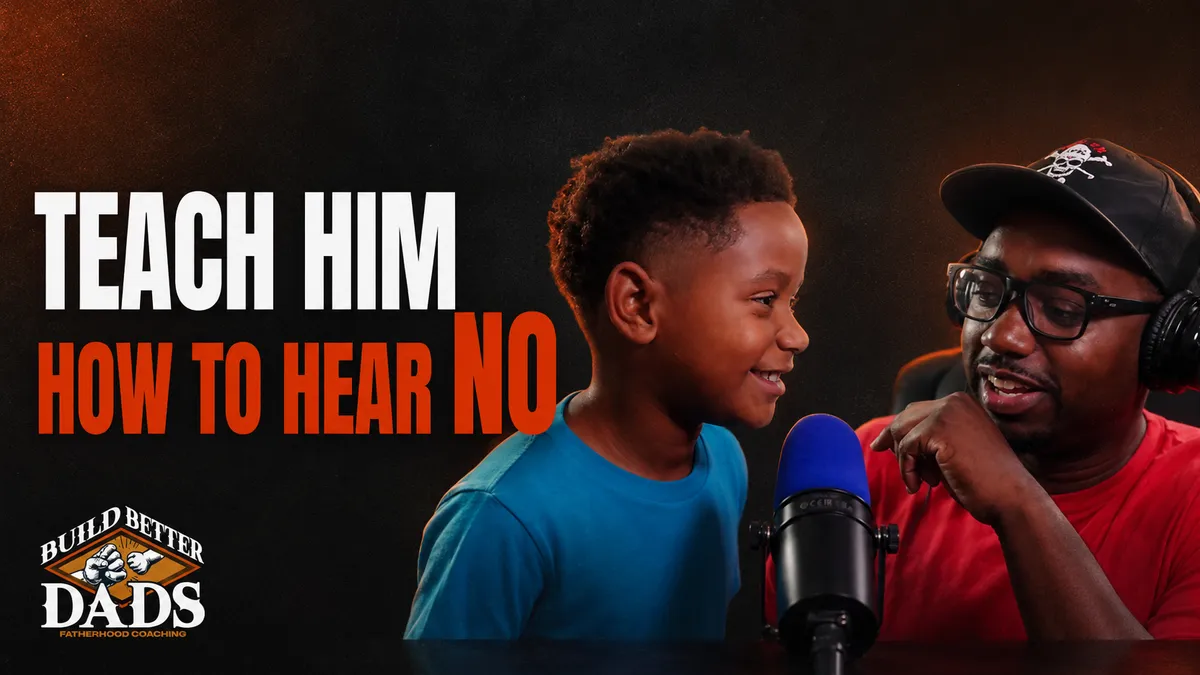
How to Talk to Your Son About Dating and Rejection
How to Talk to Your Son About Girls, Dating, Respect and Rejection
One day, my son Karter will like someone enough to risk hearing “no.”
He may experience attraction, excitement, pressure, jealousy, rejection and heartbreak. He will make choices in private conversations, on his phone and in moments when I am not standing beside him.
I cannot prepare him for those moments by saying only, “Treat girls right.”
That is important—but it is incomplete.
He needs to know what respect looks like when he is disappointed. He needs to understand consent before a high-pressure situation. He needs boundaries of his own. He needs to recognize manipulation and abuse, even when he is the person experiencing them. And he needs to know that one relationship should never cost him his character, education, freedom, health or future.
Fathers should not teach sons to fear girls. We should teach them to choose relationships wisely, behave responsibly and leave situations that require them to betray who they are becoming.
What should fathers teach their sons about healthy relationships?
Fathers should teach sons that healthy relationships require mutual respect, honest communication, freely given and ongoing consent, appropriate boundaries, emotional self-control and the ability to accept rejection without pressure or retaliation. Sons should also learn to recognize controlling behavior, protect digital privacy, handle heartbreak safely and avoid sacrificing their values, responsibilities or future for a relationship.
The goal is not to make a son suspicious of every girl. It is to help him become trustworthy—and wise about whom he trusts.
Start before your son begins dating
The relationship conversation should not begin after a crisis.
Long before a first date, fathers can teach:
Other people do not owe you attention, affection or access to their bodies.
You are allowed to have boundaries too.
Being attracted to someone does not mean you know her character.
Popularity and appearance cannot tell you whether a relationship is safe.
Jealousy is a feeling, not proof of love.
Privacy is not the same as secrecy.
A relationship should not require you to abandon your responsibilities or values.
Rejection hurts, but it does not reduce your worth.
The CDC emphasizes that preteen and teenage years are a critical period for learning communication and other skills needed to create healthy relationships. CDC guidance on teen dating violence
Do not wait until hormones, pressure and opportunity arrive together. Teach the language while everyone is calm.
Teach respect as behavior—not a slogan
“Respect women” can become an empty phrase unless your son knows what it requires.
Respect looks like:
Listening without assuming agreement
Accepting boundaries without punishment or ridicule
Speaking about a girl with dignity when she is not present
Refusing to share private messages or images
Telling the truth about intentions
Not using money, gifts, popularity or pressure to create obligation
Allowing a partner to maintain friends, interests and privacy
Disagreeing without threats, insults or humiliation
Ending a relationship honestly rather than keeping someone as a backup
Respect does not mean worshipping someone, avoiding every disagreement or allowing mistreatment. Your son should not be taught that being a “good man” means tolerating insults, manipulation, violence or constant surveillance.
The standard is mutual dignity.
Ask your son:
“How should you treat a girl when you know she is not interested in you?”
His answer will tell you more than asking how he behaves when everything is going his way.
Explain consent before the moment
Consent should not be introduced as a legal technicality or a way to avoid trouble. It is part of respecting another human being.
Teach your son that consent should be:
Freely given: not produced through threats, guilt, repeated pressure, fear or manipulation
Informed: both people understand what they are agreeing to
Specific: agreement to one activity is not automatic agreement to another
Ongoing: someone can change their mind at any time
Clear: uncertainty, freezing or silence should not be treated as permission
Possible: a person who is asleep, unconscious or incapacitated cannot give meaningful consent
RAINN explains consent as an ongoing process requiring communication and mutual respect—not a single permanent “yes.” RAINN Consent 101
Use plain language:
“If you are unsure, stop and ask.”
“If she changes her mind, you stop. It does not matter how far things already went.”
“A relationship does not create permanent access to another person’s body.”
“Your boundaries matter too. You never have to participate because someone pressures, mocks or threatens you.”
Consent laws—including the age at which a person can legally consent—vary by location and circumstances. Teach your son to follow the law where he lives, but do not make legality the only standard. Something can be disrespectful, dangerous or exploitative even before it reaches a criminal threshold.
Teach him to recognize pressure—including pressure against him
Boys can experience sexual pressure, coercion, harassment and abuse too. Some may remain silent because they believe a boy is always supposed to want sexual attention or should be able to handle everything himself.
Tell your son:
He is allowed to say no.
His body belongs to him.
A previous yes does not remove his right to say no later.
Being mocked for a boundary is a warning sign.
Threats to expose messages, images or private information are abuse.
He can come to you without being blamed for needing help.
Ask:
“If someone pressured you or crossed a boundary, who would you feel safe telling?”
Make sure he can name more than one trusted adult.
What to teach your son about rejection
Rejection can hurt even when nobody did anything wrong.
A son may feel embarrassed, disappointed, jealous or angry. Those feelings deserve language—but not control over another person.
Teach him this sequence:
1. Accept the answer
“No” is not the beginning of a negotiation.
He can say:
“I understand. Thank you for being honest.”
He does not need to pretend rejection feels good. He does need to respect it.
2. Do not demand an explanation
A girl may choose to explain, but she does not owe him a courtroom defense. Pushing for reasons can become another form of pressure.
3. Protect dignity on both sides
Do not insult her, spread rumors, expose messages or recruit friends to punish her. Private disappointment should not become public humiliation.
4. Create space if needed
He may need distance from messages, posts or shared spaces while he recovers. Space is different from retaliation.
5. Separate rejection from identity
One person declining a relationship does not prove that he is unattractive, unlovable or destined to be alone.
Say:
“You were rejected from a relationship. You were not rejected from your entire future.”
6. Learn without becoming bitter
He can ask whether there is something useful to learn, but he should not turn one painful experience into a belief that all girls are dishonest or dangerous.
Ask your son:
“What does a man’s character look like five minutes after he hears no?”
How fathers can help sons survive heartbreak
Heartbreak can affect sleep, appetite, concentration, confidence and motivation. Do not minimize it because the relationship was short or because your adult problems seem larger.
Avoid:
“There are plenty of girls out there.”
“You’ll get over it.”
“She wasn’t worth it anyway.”
Joking about his pain in front of other people
Turning heartbreak immediately into a lesson about toughness
Try:
“I can tell this mattered to you.”
“Do you want me to listen, help you understand what happened or help you plan your next step?”
“What part hurts the most—the loss, the rejection or the future you imagined?”
“What would help you protect your dignity while you heal?”
“What routines do we need to keep steady while this hurts?”
Help him maintain sleep, school, work, movement, friendships and responsibilities. Pain may explain a difficult week, but it should not be allowed to dismantle his entire life.
If heartbreak leads to persistent hopelessness, severe withdrawal, dangerous behavior, threats, self-harm or talk of suicide, seek professional help immediately. In the United States, call or text 988 for crisis support.
Help him distinguish healthy interest from obsession
Healthy interest makes room for the other person’s choice. Obsession attempts to eliminate that choice.
Warning signs include:
Repeatedly contacting someone who asked for space
Tracking a location without genuine agreement
Creating new accounts after being blocked
Treating delayed replies as betrayal
Showing up uninvited repeatedly
Monitoring followers, likes and private messages
Threatening self-harm to prevent a breakup
Believing persistence should eventually defeat a clear no
Do not romanticize these behaviors as proof that he cares deeply. Unwanted repeated contact can become stalking or harassment.
Say:
“Love does not require you to erase another person’s freedom.”
The same standard protects your son. If someone repeatedly monitors, threatens or isolates him, he should tell a trusted adult and document concerning behavior where appropriate.
Digital behavior can change a young man’s future
Teen relationships now continue through phones even when two people are physically apart. Fathers must discuss digital behavior directly.
Teach your son:
Private messages can become public
Before sending anything, ask:
“Would I be willing for my parent, coach, principal, future employer or future partner to see this?”
That is not a guarantee of privacy. It is a decision filter.
Never share intimate images
He should never request, forward, save, threaten to share or post an intimate image without permission. Images involving minors can create severe emotional, school and legal consequences, and laws vary by jurisdiction.
The American Academy of Pediatrics warns families that sexting may carry serious legal and school consequences. HealthyChildren.org guidance on sexting
A private image is not ownership
Receiving an image does not grant permission to distribute it. A breakup, argument or betrayal never creates that permission.
The Federal Trade Commission defines image-based abuse as creating, sharing or threatening to share intimate images without permission—including altered images and AI-generated deepfakes. FTC guidance on image-based abuse
Do not use a phone as a control device
Healthy relationships do not require constant location access, password sharing, immediate replies or proof of loyalty through private content.
Keep evidence when something unsafe happens
If your son is being threatened, blackmailed or harassed, tell him not to pay, retaliate or negotiate alone. Preserve relevant evidence, stop direct engagement when safe and involve a trusted adult and appropriate authorities or reporting services.
Choosing a relationship that supports—not destroys—his future
Attraction can begin a relationship. It cannot evaluate one.
Teach your son to notice patterns.
A healthy relationship usually includes:
Mutual respect
Honest communication
Freedom to maintain friendships and responsibilities
Boundaries that are accepted
Accountability after mistakes
Disagreement without fear
Support for healthy goals
Trust that does not require surveillance
The ability to say no
Two people who remain responsible for their own lives
An unhealthy relationship may include:
Humiliation disguised as jokes
Constant jealousy or accusations
Pressure to abandon friends, family, school, work or goals
Threats, intimidation or physical harm
Sexual pressure
Demands for passwords, location or immediate access
Destruction of property
Repeated breakups used as punishment
Threats of self-harm to control the other person
Sharing private information or images
Teen dating violence can be physical, sexual, psychological or electronic, and unhealthy patterns can begin early. The CDC notes that prevention includes teaching healthy communication and relationship skills before violence occurs. CDC teen dating violence information
Ask your son:
“Does this relationship help you become more responsible, honest and focused—or does it require you to become less of yourself?”
No relationship will make him productive every day. The question is whether the overall pattern supports growth or repeatedly pulls his life apart.
Teach boundaries without teaching control
A boundary describes what I will do to protect my well-being and values. Control dictates what you must do to manage my insecurity.
Boundary:
“I will not stay in a relationship where we insult each other during arguments.”
Control:
“You are not allowed to speak to any boy because I get jealous.”
Boundary:
“I am not sharing my password. I do not need yours either.”
Control:
“Give me your password or prove you have nothing to hide.”
Boundary:
“If you threaten me, I will leave and involve an adult.”
Control:
“If you leave me, I will destroy your reputation.”
Teach him to communicate a boundary clearly, follow through safely and avoid using boundaries as disguised punishment.
Fathers teach relationships through their own behavior
Your son is watching how you:
Speak to his mother or your partner
Handle disagreement
Respond to a boundary
Talk about former partners
Apologize after causing harm
Control jealousy
Divide responsibility at home
Treat women you do not find attractive
Respond when somebody tells you no
Protect private information
You cannot teach respect convincingly while humiliating women in front of him. You cannot teach self-control while making threats during every conflict. You cannot teach boundaries while invading everyone else’s privacy.
Perfection is not required. Repair is part of the lesson:
“The way I spoke was disrespectful. Being upset did not excuse it. I apologized, and I need to respond differently next time.”
A father-son dating conversation you can use
Start with:
“I’m not here to embarrass you or interrogate you. I want to make sure you know how to protect another person’s dignity and your own future.”
Then ask:
What do you think makes a relationship healthy?
How would you know if someone felt pressured or uncomfortable?
What would you do if someone said no or changed her mind?
What boundaries would you want respected?
Which online behaviors could hurt somebody permanently?
What warning signs would tell you a relationship is becoming controlling?
Who would you call if you felt trapped, threatened or ashamed?
What responsibilities and values should never disappear because you are dating?
Do not ask all eight like an interview. Choose the question that fits his age and return to the conversation over time.
Frequently asked questions
What should a father teach his son about dating?
A father should teach his son mutual respect, honest communication, consent, boundaries, emotional self-control, digital responsibility, wise partner selection and how to accept rejection without pressure or retaliation.
How should a father explain consent to his son?
Explain that consent must be freely given, informed, specific, ongoing and clear. Either person can change their mind. Silence, fear, pressure, incapacitation or a previous yes should not be treated as current permission. Local consent laws must also be followed.
How can I teach my son to handle rejection?
Teach him to accept the answer, avoid demanding explanations, protect both people’s dignity, take healthy space and separate one person’s decision from his entire worth. Rejection can hurt without becoming permission to retaliate.
What are signs of an unhealthy teenage relationship?
Warning signs include constant jealousy, isolation from friends or family, password demands, repeated monitoring, humiliation, threats, sexual pressure, physical aggression, image sharing and threats of self-harm used to prevent a breakup.
Should parents monitor a teenager’s dating relationship?
Parents should remain aware of who their teenager spends time with, set age-appropriate rules and stay available for honest conversation. Monitoring should support safety and responsibility without relying on humiliation or unnecessary surveillance. The level should reflect age, maturity, behavior and risk.
What should my son do if someone sends him an intimate image?
He should not forward, post or use it to threaten the sender. If minors are involved, legal requirements vary and can be serious; he should involve a trusted adult rather than handling it alone. If the image is connected to threats or exploitation, preserve relevant evidence and seek appropriate help.
Can boys experience dating abuse?
Yes. Boys can experience physical, sexual, psychological and digital abuse. Fathers should make it safe for sons to report coercion, threats, humiliation or violence without being mocked for weakness.
How can fathers discuss sex without encouraging it?
Providing accurate information about consent, consequences, health, values and responsibility does not require encouraging sexual activity. Silence leaves peers and the internet to provide the education. Fathers can state family expectations clearly while preparing sons to make safe, respectful decisions.
The real test is how he behaves when he does not get what he wants
Anybody can appear respectful while receiving attention, affection and agreement.
Character appears when the answer is no. When jealousy shows up. When a relationship ends. When private information could be used as a weapon. When nobody would know what he did.
Teach your son that relationships should add connection to his life—not remove his judgment.
He should care deeply without losing himself. Love without controlling. Accept affection without assuming ownership. Leave when safety, dignity or his future requires it. And handle rejection in a way that lets both people walk away with their humanity intact.
Ask him this week:
“What kind of man do you want to be when somebody you care about tells you no?”
For the larger father-son framework, read 7 Conversations Every Father Should Have With His Son Before 18.
Continue the emotional-strength conversation with How Fathers Can Teach Sons to Handle Anger, Fear and Pressure Without Shutting Down once that article is published.
Subscribe to the Build Better Dads YouTube channel for practical conversations about fatherhood, financial resilience, relationships and preparing children for the real world.
Help your son develop resilience, responsibility and character with The UnBreakable Son Ebook.